
Whole-Home Water Treatment in Gilbert, AZ
Tired of hard water scale & chlorine smell in Gilbert, AZ? Learn how a whole-home water treatment system delivers pure, safe water from every tap.
 By Matt · Plumbing
Free estimates • Honest second opinions •Licensed, bonded & insured
In this article
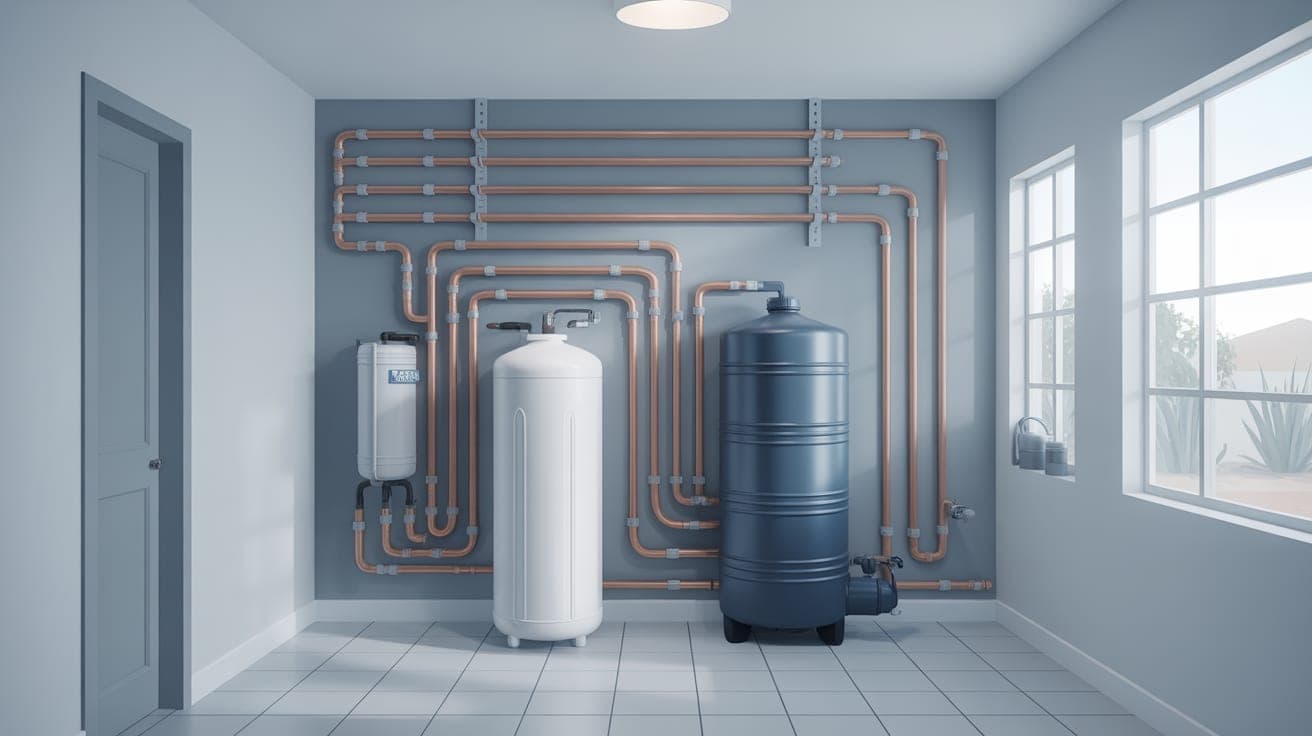
A whole-home water treatment system delivers pure, great-tasting water from every tap by targeting specific contaminants in your Gilbert, AZ water. At Sunset Home Services, we design custom solutions that go far beyond basic softeners, combining filtration technologies to eliminate hard water scale, chlorine, and more for ultimate safety and quality.
Table of contents
- What Contaminants Are Actually in My East Valley Water?
- What Are My Options for a Whole Home Water Treatment System?
- How Do I Choose the Right System for My Family?
- What's Involved in Professional Water Testing & Installation?
- Frequently asked questions
What Contaminants Are Actually in My East Valley Water?
While your tap water begins its journey clean, it picks up various substances on its way to your home. Municipal water in places like Gilbert, AZ, is treated to be safe by regulatory standards, but it still contains elements that can affect its taste, smell, and impact on your home's plumbing. A water softener is a great start, but it only addresses one issue: hardness.
The common culprits we find in local water tests
- Hardness (Calcium & Magnesium): This is the most famous issue in Arizona water. These dissolved minerals create limescale, the chalky white buildup you see on faucets and shower doors. This scale also forms inside your pipes and appliances, reducing efficiency and leading to costly breakdowns. It’s a primary reason for early water heater replacement in our area.
- Chlorine & Chloramine: Municipalities add these disinfectants to kill bacteria and viruses, which is essential for public health. However, once the water reaches your home, these chemicals can give it a distinct swimming pool taste and smell, dry out your skin and hair, and fade your clothes in the wash.
- Volatile Organic Compounds (VOCs): This is a broad category of industrial and chemical contaminants, including pesticides, herbicides, and solvents, that can find their way into water sources. While typically present in low concentrations, many homeowners prefer to filter them out.
- PFAS (Per- and Polyfluoroalkyl Substances): Often called "forever chemicals," PFAS are man-made chemicals used in products like non-stick cookware and firefighting foam. They are incredibly persistent in the environment and are an emerging concern for water quality nationwide.
- Sediment & Particulates: Rust, sand, and silt can be picked up from older municipal pipes, leading to cloudy water and potential damage to your home’s appliances and plumbing fixtures.
What Are My Options for a Whole Home Water Treatment System?
A truly effective whole-home water treatment system is rarely a single device. It’s a customized combination of technologies, each targeting specific contaminants. Think of it as a multi-stage process where water is progressively purified as it enters your home.
A breakdown of the core technologies and how they work
- Water Softeners (Ion Exchange): The classic solution for hard water. As water passes through a tank of resin beads, magnesium and calcium ions (the "hardness") are swapped for sodium or potassium ions. This eliminates scale buildup entirely.
- Activated Carbon Filters: This is the workhorse for improving taste and smell. Carbon has a massive surface area with millions of tiny pores. Through a process called adsorption, unwanted chemicals like chlorine, VOCs, and pesticides stick to the carbon's surface while water passes through.
- Reverse Osmosis (RO): This is the most powerful filtration method. RO uses high pressure to force water through a semipermeable membrane with microscopic pores. This membrane blocks an extremely wide range of contaminants, including salts, heavy metals, fluoride, and PFAS, allowing only pure water molecules to pass through.
- UV Purifiers: A UV purifier uses ultraviolet light to scramble the DNA of microorganisms like bacteria, viruses, and cysts. This renders them harmless and unable to reproduce. It's a chemical-free way to ensure microbiological safety, especially for homes on well water.
Comparing Water Treatment Technologies
| Primary Function | Removes/Reduces | Best For | Key Limitation | |
|---|---|---|---|---|
| Water Softener | Removes hardness minerals | Calcium, Magnesium | Protecting plumbing & appliances from scale | Does not filter chemicals or improve taste |
| Activated Carbon | Improves taste, smell, & clarity | Chlorine, Chloramine, VOCs, Pesticides | Eliminating chemical tastes and odors | Does not remove hardness or dissolved solids |
| Reverse Osmosis | Purifies water to the highest level | TDS, PFAS, Fluoride, Heavy Metals, Nitrates | Ultimate purity for drinking and cooking | Slower process; typically for drinking water taps |
| UV Purifier | Disinfects water | Bacteria, Viruses, Cysts, Protozoa | Ensuring microbiological safety (well water) | Does not remove any chemical or mineral contaminants |
Honest second opinion
Not sure you need a full replacement?
Sunset Home Services gives free second opinions across Gilbert and the East Valley. We'll tell you what actually failed and whether a repair is still the right call.
How to Choose the Right Whole-Home Water Treatment System
There is no single "best" system—only the best system for your water and your goals.
The right choice depends on a clear-eyed assessment of three factors
- What's in your water? You can't solve a problem you haven't identified. A generic filter from a big-box store is a shot in the dark. Professional water testing is the only way to know exactly which contaminants you need to target.
- What are your goals? Are you primarily concerned with protecting your pipes and appliances from scale? Or is your main goal to have purified, great-tasting drinking water from every tap? Do you have sensitive skin that reacts to chlorine? Your priorities will determine the right combination of technologies.
- What is your budget and maintenance tolerance? Systems vary in upfront cost and ongoing maintenance. Salt for a softener and periodic filter changes for carbon or RO systems are recurring costs. We believe in being transparent about the total cost of ownership so you can make an informed decision.
Our Professional Water Testing & Installation Process
This is where a professional partner makes all the difference. Our process at Sunset Home Services is designed to be clear, effective, and tailored to your home.
First, we conduct a comprehensive water test right at your home. We analyze your water for hardness, chlorine levels, pH, and Total Dissolved Solids (TDS). This data gives us a precise picture of your water quality, allowing us to recommend a solution built specifically for you.
Next, we design your system. For most homes in the East Valley, a great solution often involves a two-stage approach: a water softener to handle the extreme hardness, followed by a whole-home activated carbon filter to remove chlorine and other chemicals. This combination protects your entire plumbing system while delivering clean, refreshing water to every faucet, shower, and appliance.
Finally, our licensed plumbers handle the installation. A whole home water treatment system is integrated directly into your main water line. This is not a simple DIY project; it requires professional knowledge of plumbing codes and practices to ensure it functions correctly and without leaks. We ensure the installation is seamless, clean, and done right the first time.
Ready to stop putting up with hard, bad-tasting water? Contact the experts at Sunset Home Services. We’ll test your water, listen to your needs, and design the perfect whole-home solution for your Gilbert-area home. Call us today at (480) 599-5086.
Frequently asked questions
What is the best water filtration system for an entire house?
The best system is one that is customized to your specific water quality and household needs. For most homes in Arizona with city water, an ideal combination is a water softener to remove hardness and protect plumbing, paired with a whole-home activated carbon filter to remove chlorine and improve taste and smell.
Is a whole-home water system a worthwhile investment?
Yes, for many homeowners it is. A whole-home system protects your expensive plumbing and appliances (like water heaters and dishwashers) from damaging scale buildup, potentially saving you thousands in premature replacement costs. It also improves your quality of life with better-tasting water, healthier skin and hair, and cleaner laundry.
How much should a whole house water treatment system cost?
The cost varies widely based on the technology and size required for your home. A simple sediment or carbon filter system might cost a few hundred dollars plus installation, while a comprehensive multi-stage system with a high-quality water softener can range into the thousands. The key is to invest in a system that solves your specific water problems.
What are the disadvantages of a whole house water filter?
The primary disadvantages are the upfront installation cost and the need for ongoing maintenance. All filtration systems require periodic media or filter changes to remain effective, which is a recurring expense. Additionally, some systems, like softeners, require space for the tanks and a drain for regeneration cycles.
Will a whole-home water system reduce my water pressure?
When sized and installed correctly by a professional, a whole-home water system should have a negligible impact on your water pressure. Undersized systems or improper installation can cause a noticeable drop, which is why professional consultation is critical.
How often do I need to change the filters?
This depends entirely on the type of filter and your water usage. Sediment pre-filters may need changing every 3-6 months. The carbon media in a large whole-home tank can last for several years. We provide a clear maintenance schedule with every system we install.
Can I install a whole-home water system myself?
While it may seem like a way to save money, we strongly advise against it. These systems connect directly to your home's main water line, and an improper connection can lead to major leaks and water damage. A professional plumber ensures the installation meets all local codes and functions correctly.
Related Sunset services
Need hands-on help? These are the services most relevant to this article.
- Water TreatmentSofteners and filtration to tame Arizona's hard water and buildup.View service
- General PlumbingLeaks, low water pressure, repairs, and installs handled right the first time.View service
- Drain CleaningClear slow or clogged kitchen, bath, and main-line drains fast.View service
- Water Heater Repair & ReplacementNo hot water or a leaking tank? Repair or right-size a new unit.View service
- Sewer Repair & ReplacementDiagnose and fix cracked, sagging, or root-blocked sewer lines.View service
Keep reading
- Plumbing 8 min read
Signs Your Water Heater Is Done
Rusty hot water, a rumbling tank, or a puddle that keeps coming back. Here's how to tell whether your water heater is worth repairing, and what an honest replacement in Gilbert actually involves.
By Matt · Read more - Plumbing 5 min read
Why Your Drains Keep Clogging (and When to Call a Plumber)
A drain that clogs again a week after you cleared it is trying to tell you something. Here's what repeat clogs usually mean and when it's time to call.
By Matt · Read more - Plumbing 5 min read
Sun Lakes Drain Cleaning & Clog Repair Service
Tired of slow or clogged drains in Sun Lakes? Sunset Home Services offers expert drain cleaning, repair.
By Matt · Read more