
A Homeowner's Guide to Heat Pump Efficiency in AZ
Is a heat pump efficient in Arizona? Yes. Learn how high SEER2 & HSPF2 ratings lower your energy bills in Gilbert's climate and what to do to maximize
 By Sean · HVAC
Free estimates • Honest second opinions •Licensed, bonded & insured
In this article
At Sunset Home Services, we know heat pump efficiency is the key to affordable year-round comfort in your Arizona home. Instead of burning fuel, a heat pump moves heat—providing powerful cooling and heating from a single unit. This guide explains how that efficiency translates into real savings.
Table of contents
What Is Heat Pump Efficiency and Why Does It Matter in Arizona?
Heat pump efficiency is a measure of how much heating or cooling a system provides for each unit of electricity it consumes. Because a heat pump transfers heat rather than generating it by burning fuel, it can achieve efficiency ratings well over 100%—often delivering 3 to 4 units of heat energy for every 1 unit of electrical energy it uses. For homeowners in Gilbert, AZ, this high efficiency is crucial for managing year-round HVAC costs.
To understand this technology, you need to know its key efficiency ratings
- SEER2 (Seasonal Energy Efficiency Ratio 2): This rating measures cooling efficiency over an entire season, calculated using updated testing procedures that better reflect real-world conditions. A higher SEER2 rating means greater efficiency and lower electricity bills during our scorching summers. The federal minimum is 14.3 for our region, but high-efficiency models can exceed 20.
- HSPF2 (Heating Seasonal Performance Factor 2): This is the counterpart to SEER2, measuring a heat pump's heating efficiency. A higher HSPF2 rating indicates more efficient heating during our cooler months. The minimum is 7.5, with top-tier units reaching 10 or more.
- COP (Coefficient of Performance): This is an instantaneous measure of efficiency, showing the ratio of heat output to electrical input at a specific temperature. A COP of 4 means the heat pump is producing four times more heat energy than the electrical energy it consumes.
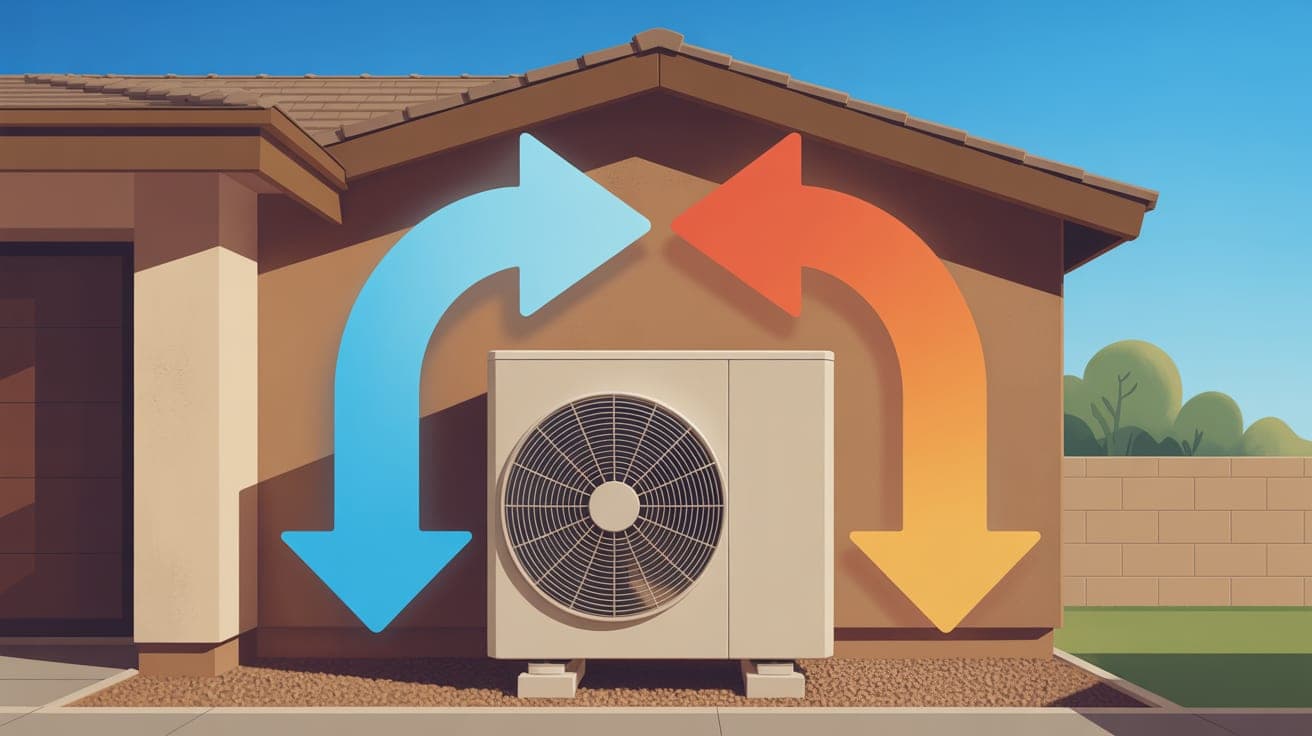
Essentially, a heat pump works like a two-way air conditioner. In summer, it pulls heat from inside your home and transfers it outside. In winter, a reversing valve changes the flow of refrigerant, allowing the unit to absorb ambient heat from the outside air—even when it feels cold—and transfer it inside to warm your home.
How Does Heat Pump Efficiency Compare to a Traditional AC and Furnace?
When you compare a heat pump to a traditional setup, the advantages become clear. While a separate air conditioner and gas furnace is a familiar combination, a heat pump offers a unified, more energy-conscious solution. The primary difference is how they produce heat: a furnace burns natural gas or propane, while a heat pump simply moves existing heat.
| Heat Pump System | Traditional AC + Gas Furnace | |
|---|---|---|
| Function | Provides both heating and cooling in a single, all-electric unit. | Two separate systems: an AC for cooling, a furnace for heating. |
| Cooling Efficiency | High. Measured by SEER2, comparable to high-efficiency standalone AC units. | High. Measured by SEER2. Can be very efficient depending on the model. |
| Heating Efficiency | Extremely high (200-400%+). Measured by HSPF2. Moves heat instead of creating it. | Good (80-97%). Measured by AFUE. Always less than 100% due to heat loss. |
| Upfront Cost | Moderate to high. You are buying one system that performs two functions. | Moderate to high. Cost is spread across two separate pieces of equipment. |
| Operating Cost | Lower year-round, especially for heating, due to superior efficiency. | Cooling costs are similar. Heating costs depend on natural gas prices. |
| Environmental Impact | Lower. All-electric operation means no onsite carbon emissions. | Higher. Burning natural gas or propane creates carbon dioxide. |
Choosing between them often comes down to weighing the higher initial investment of a quality heat pump against the significant long-term savings on your monthly utility bills. For many homeowners in our service areas like Queen Creek and Chandler, the math points decisively toward a heat pump.
Honest second opinion
Not sure you need a full replacement?
Sunset Home Services gives free second opinions across Gilbert and the East Valley. We'll tell you what actually failed and whether a repair is still the right call.
What Factors Determine Your Heat Pump's Real-World Efficiency?
The efficiency ratings on the sticker (SEER2 and HSPF2) are just the beginning. Several crucial factors determine how efficiently your heat pump will actually operate in your home.
- Correct Sizing: An oversized unit will cycle on and off too frequently (short-cycling), which wastes energy and fails to properly dehumidify your home. An undersized unit will run constantly without ever reaching the set temperature, leading to high bills and excessive wear. A professional load calculation is non-negotiable for proper sizing.
- Ductwork Integrity: Leaky, poorly insulated, or improperly designed ductwork can lose up to 30% of the conditioned air before it even reaches your rooms. Your super-efficient heat pump's hard work is wasted if the delivery system is flawed.
- Installation Quality: The quality of the installation is paramount. An expert technician ensures correct refrigerant charging, proper airflow, and secure connections. A poor installation can cripple the efficiency and lifespan of even the most expensive unit.
- Home Insulation and Sealing: Your home's building envelope—its insulation, windows, and air sealing—plays a massive role. A well-insulated home holds onto conditioned air longer, reducing the workload on your heat pump.
- Thermostat and Settings: Modern smart thermostats can optimize runtimes based on your schedule and even utility peak hours. Using them correctly prevents unnecessary energy consumption.
How Do I Maintain Peak Heat Pump Efficiency Year-Round?
Regular maintenance is the single best way to protect your investment and ensure you get the heat pump efficiency you paid for. Neglecting it leads to a slow decline in performance, higher bills, and a shorter system lifespan. Fortunately, the steps are straightforward.
- Change Your Air Filter Regularly: This is the easiest and most impactful task. A clogged filter restricts airflow, forcing the system's fan motor to work harder and reducing efficiency. Check it monthly and change it at least every three months.
- Keep the Outdoor Unit Clear: The outdoor condenser needs unrestricted airflow. Remove any leaves, grass clippings, or debris that accumulate on the fins. Ensure there is at least two feet of clearance around the unit on all sides.
- Check for Blocked Vents: Walk through your home and make sure all supply and return vents are open and not blocked by furniture or rugs.
- Schedule Professional Tune-Ups: An annual professional tune-up is essential. During one of our residential routine HVAC maintenance services, a technician will clean the coils, check refrigerant levels, test electrical components, and lubricate motors. This service not only maintains efficiency but also catches small issues before they become expensive breakdowns requiring emergency heating repair in Gilbert, AZ.
Your home's comfort system is a significant investment. Understanding how heat pump efficiency works empowers you to make an informed choice that provides comfort, reliability, and financial savings for years. If you're ready to explore whether a high-efficiency heat pump is the right solution for your home, contact the honest professionals at Sunset Home Services at (480) 599-5086 for a no-pressure consultation.
Frequently asked questions
What are the disadvantages of a heat pump?
The primary disadvantages are a higher upfront installation cost compared to a traditional AC unit alone and reduced heating efficiency in extremely cold climates. However, in the mild winters of the East Valley, modern heat pumps perform exceptionally well without needing auxiliary heat strips very often.
At what temperature does a heat pump lose its efficiency?
Most modern heat pumps can extract heat from the air efficiently down to about 25-30°F. Below this "balance point," their efficiency drops, and they may rely on supplemental electric resistance heating (heat strips) to meet demand, which is less efficient. Cold-climate models are now available that work efficiently into the single digits.
Why could my electric bill be high with a new heat pump?
If your electric bill is unexpectedly high, it's often due to the overuse of auxiliary heat strips, an improperly sized unit, leaky ductwork, or incorrect thermostat settings. It's crucial to have a professional diagnose the issue, as it's not normal for a properly installed and functioning heat pump to cause high bills.
What's the approximate cost for a new heat pump installation?
The cost for a new heat pump system varies widely based on the home's size, the unit's efficiency rating (SEER2/HSPF2), brand, and the complexity of the installation (e.g., whether ductwork needs modification). A professional consultation is the only way to get an accurate quote for your specific home.
What do SEER2 and HSPF2 ratings mean for me?
Think of them like MPG for your car. A higher SEER2 rating means you'll pay less to cool your home in the summer. A higher HSPF2 rating means you'll pay less to heat your home in the winter. Investing in higher ratings costs more initially but pays you back through lower monthly utility bills.
How long does a heat pump last in Arizona?
With our long cooling season, a heat pump in Arizona typically lasts between 12 to 15 years. Regular professional maintenance is the most critical factor in reaching and sometimes exceeding this lifespan while maintaining high efficiency.
Related Sunset services
Need hands-on help? These are the services most relevant to this article.
- AC RepairAC not cooling? Fast, accurate diagnosis and honest repair options.View service
- HVAC MaintenanceTune-ups that keep your system efficient through the AZ summer.View service
- AC Installation & ReplacementRight-sized, properly installed AC and heating systems that last.View service
- Ductwork Servicing & CleaningSeal leaks and clear ducts for better airflow and lower bills.View service
- Mini Split SystemsDuctless comfort for garages, additions, and hard-to-cool rooms.View service
Keep reading
- HVAC 7 min read
Pro AC Installation in Gilbert, AZ: Buyer's Guide
Need a new AC installation in Gilbert, AZ? Our 2026 guide covers system sizing (Manual J), SEER2 ratings, and new refrigerants for lasting home comfort.
By Sean · Read more - HVAC 7 min read
AC Running But Not Cooling in Gilbert, AZ
AC running but not cooling in Gilbert? Common causes: clogged filters, failed capacitors, low refrigerant. What to check before you call Sunset.
By Sean · Read more - HVAC 8 min read
AC Capacitor Failure in Gilbert, AZ
AC capacitor failure is common in Gilbert heat. Learn the signs, why DIY is risky, and how Sunset replaces capacitors safely and fast.
By Sean · Read more