
Is a Heat Pump Water Heater Worth the Cost in AZ?
Discover how a heat pump water heater can dramatically lower your energy bills in Gilbert. These ultra-efficient units pay for themselves with big savings.
 By Matt · Plumbing
Free estimates • Honest second opinions •Licensed, bonded & insured
In this article
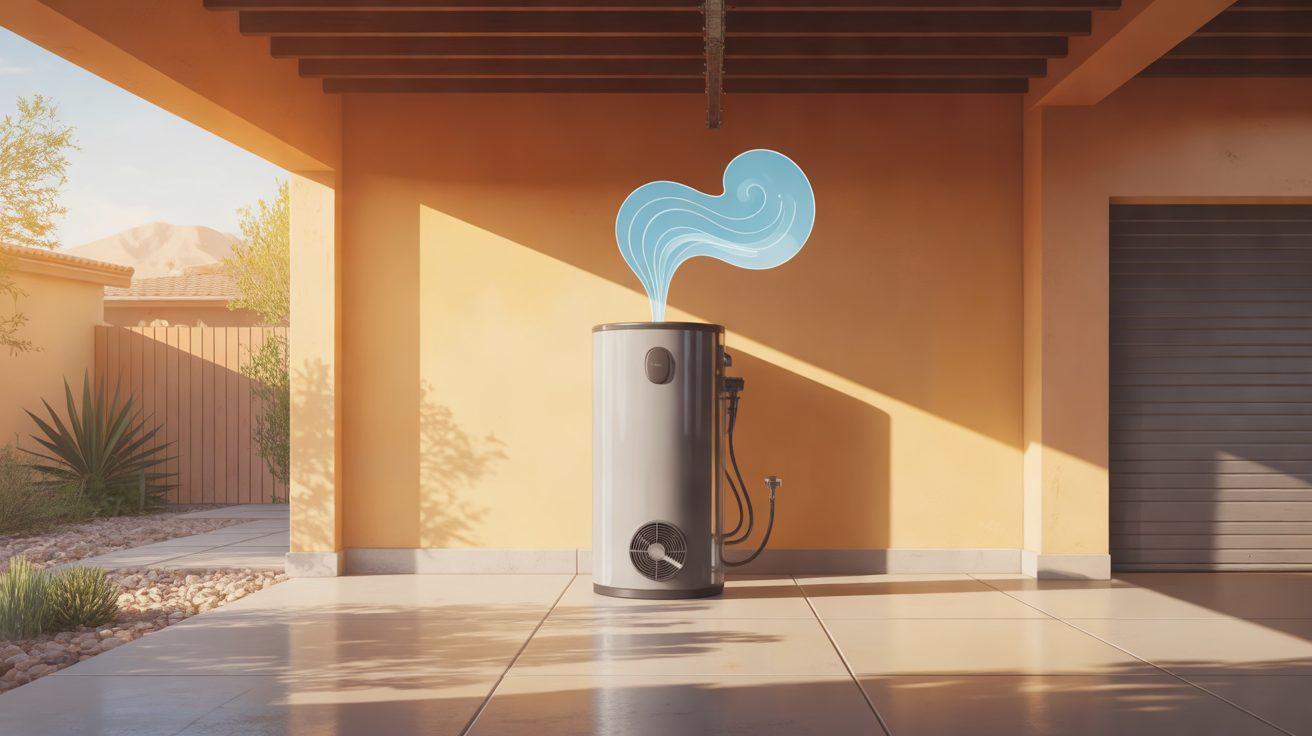
A heat pump water heater offers Gilbert homeowners exceptional efficiency by moving heat from the surrounding air into your water, rather than creating it with heating elements. This advanced technology provides significant long-term energy savings, reduces your carbon footprint, and delivers consistently reliable hot water for your home.
Table of contents
How Do Heat Pump Water Heaters Work?
A heat pump water heater works like a refrigerator in reverse. Instead of pumping heat out to keep things cold, it uses a refrigeration cycle to pull heat from the surrounding air and transfer it into the water tank. A fan draws ambient air over an evaporator coil containing a cold refrigerant, which absorbs the air's heat and turns into a gas. This gas is then pressurized by a compressor, dramatically increasing its temperature. The hot gas flows through coils wrapped around the tank, transferring its heat to the water inside. As it cools, the refrigerant condenses back to a liquid and the cycle repeats. This process of moving heat is far more energy-efficient than creating it from scratch with electric resistance elements.
How Much Can You Save with a Heat Pump Water Heater?
The primary reason homeowners upgrade to a heat pump water heater is its incredible efficiency, which translates directly into lower monthly utility bills. This efficiency is measured by the Uniform Energy Factor (UEF), the Department of Energy's official metric. It represents the ratio of useful energy output to the total energy consumed; a higher UEF rating means a more efficient unit. While a standard electric tank heater may have a UEF of 0.95, many heat pump models boast UEF ratings of 3.0 or higher. This means they can be three to four times more efficient, significantly cutting your water heating energy use. While the upfront investment is higher, the long-term savings often pay for the unit over its lifespan, especially with available tax credits and rebates.
Honest second opinion
Not sure you need a full replacement?
Sunset Home Services gives free second opinions across Gilbert and the East Valley. We'll tell you what actually failed and whether a repair is still the right call.
What Are the Key Installation Requirements?
Proper installation is critical for a heat pump water heater to operate at peak efficiency. Unlike a simple tank swap, these units have specific needs that our plumbing professionals carefully assess.
- Air Space: They require adequate air space to function. According to ENERGY STAR, most units need a minimum of 450 to 700 cubic feet of free air space. This typically means a room that is at least 7 feet by 10 feet by 7 feet, making a garage or a large utility closet an ideal location.
- Condensate Management: As the unit dehumidifies the air, it produces water that must be drained away. This requires a nearby floor drain or a condensate pump to manage the moisture.
- Electrical Requirements: They have specific electrical requirements, usually a 240V circuit, similar to a traditional electric water heater.
Our team ensures all these conditions are met for a safe and effective installation.
Heat Pump vs. Traditional Water Heaters: A Comparison
Choosing the right water heater involves weighing upfront cost against long-term operating expenses. For many homeowners in Gilbert, AZ, the decision comes down to a heat pump model versus a conventional electric tank.
| Heat Pump Water Heater | Traditional Electric Tank Heater | |
|---|---|---|
| Energy Efficiency (UEF) | Very High (Typically 3.0+) | Standard (Typically 0.90-0.95) |
| Upfront Cost | Higher | Lower |
| Monthly Operating Cost | Very Low | Moderate to High |
| Installation Needs | Requires 450-700+ cu. ft. of space, condensate drain, 240V circuit | Standard plumbing connections, 240V circuit |
| Environmental Impact | Low; reduces electricity demand and carbon footprint | High; significant electricity consumption |
| Noise Level | Audible hum during operation (45-55 decibels per ENERGY STAR) | Nearly silent |
| Recovery Speed | Slower in heat pump mode; most have backup elements for high demand | Fast; relies solely on powerful heating elements |
While a traditional tank may have a lower purchase price, the heat pump model's efficiency provides substantial savings year after year. If your current unit is showing signs of failure, considering a full water heater replacement with a modern heat pump unit is a smart financial move.
Is a Heat Pump Water Heater Right for Your Home?
A heat pump water heater is an excellent choice for homeowners who plan to stay in their homes for several years and want to invest in long-term energy savings. They are best suited for homes with a suitable installation location, such as a garage or a large, unfinished basement. The consistent warmth of the Arizona climate further enhances their efficiency, as they work best in ambient temperatures between 40°F and 120°F, as noted by ENERGY STAR. Regular air conditioner tune-ups and water heater maintenance can keep your home's major systems running efficiently for years.
If you're ready to explore the benefits of a heat pump water heater for your home in the East Valley, contact Sunset Home Services at (480) 599-5086. Our expert technicians provide honest diagnoses and reliable workmanship, helping you find the perfect solution for your family's hot water needs.
Sources
Frequently asked questions
Is a heat pump the same as a hot water heater?
No, a heat pump is a technology, while a hot water heater is an appliance. A heat pump water heater is a specific type of hot water heater that uses heat pump technology to heat water. This differs from traditional electric or gas water heaters, which create heat directly through resistance coils or combustion.
What water heater do plumbers recommend?
Professional plumbers recommend the water heater that best fits the specific needs of the household. This recommendation is based on factors like family size, daily hot water usage, available fuel source (gas or electric), installation space, budget, and efficiency goals. For homeowners prioritizing long-term savings and energy efficiency, plumbers often recommend heat pump water heaters.
What are the pros and cons of a heat pump water heater?
The main pro is exceptional energy efficiency, leading to significant long-term cost savings and a smaller carbon footprint. They also dehumidify the surrounding air. The primary cons are a higher upfront purchase price, slower water heating recovery time (though most have backup elements), and specific installation requirements, including more space and a condensate drain.
Can I use a heat pump on my geyser?
In many parts of the world, the term "geyser" is used to refer to a tank-style water heater. In that context, yes—a heat pump water heater is essentially a modern, highly efficient version of a geyser. It integrates heat pump technology with a storage tank to heat and store water for your home.
How much noise does a heat pump water heater make?
Heat pump water heaters are not silent, as they have a fan and a compressor. However, modern units are quite quiet. According to ENERGY STAR, they typically operate at a sound level of 45-55 decibels, which is comparable to the hum of a modern refrigerator or a quiet office environment.
How do Amish communities get hot water without electricity?
Amish communities often rely on off-grid methods for heating water. Common solutions include using wood-burning stoves equipped with water-heating coils, dedicated gas or propane tank water heaters, or solar thermal systems. These methods allow them to have hot water without connecting to the public electrical grid.
Does a heat pump water heater work in the winter?
Yes, a heat pump water heater can work in the winter. As long as the ambient air temperature around the unit is within its operational range—typically 40°F to 120°F—it can effectively extract heat. If the temperature drops too low for the heat pump to work efficiently, most units have built-in electric resistance heating elements that activate automatically to ensure you always have hot water.
Related Sunset services
Need hands-on help? These are the services most relevant to this article.
- Water Heater Repair & ReplacementNo hot water or a leaking tank? Repair or right-size a new unit.View service
- General PlumbingLeaks, low water pressure, repairs, and installs handled right the first time.View service
- Drain CleaningClear slow or clogged kitchen, bath, and main-line drains fast.View service
- Sewer Repair & ReplacementDiagnose and fix cracked, sagging, or root-blocked sewer lines.View service
- Fixture Repair & ReplacementFaucets, toilets, disposals, and fixtures repaired or upgraded.View service
Keep reading
- Plumbing 6 min read
Hydro Jet Drain Cleaning Service
Expert hydro jet drain cleaning in Gilbert, AZ. Our powerful service scours pipes clean of grease, scale, and even roots for a truly long-lasting solution.
By Matt · Read more - Plumbing 6 min read
When a Drain Snake Is Not Enough
Grease, roots, and scale that come back after a snake. How jetting cleans the pipe wall, and when it is the right step.
By Matt · Read more - Plumbing 6 min read
Whole-Home Water Treatment in Gilbert, AZ
Hard-water scale and chlorine taste in Gilbert? How softening and filtration differ, and what a whole-home system does not fix.
By Matt · Read more